Introduction
At the start of the semester, my understanding of digital marketing was fairly basic. I was familiar with things like social media and online content, but I was unaware of how all of the pieces work together in a strategic way on the back end. Over the course of the semester, that began to change as I started connecting what I was learning to actual projects and results.
Working with tools like Google Analytics 4 and Google Search Console allowed me to see real data behind user behavior and helped everything feel more practical, giving me a better understanding of how digital marketing decisions actually impact performance. This report highlights what I worked on, what I learned, and how my skills developed along the way.
Course Overview
This course, BADM 445-Digital Marketing, was designed to build a well-rounded understanding of digital marketing in today’s business environment. It covered topics including search engine optimization (SEO), email marketing, social media strategy, and web analytics. Rather than focusing on theory alone, the course emphasized applying these concepts through ongoing projects, showing how they all connect within a larger strategy.
Each assignment built on the last one, which made it easier to understand how different elements of digital marketing connect. Now that we’re at the end of the semester, I see each assignment as part of a complete process, instead of an individual posting.
Theoretical Knowledge Gained
Throughout the course, I developed a better understanding of how businesses connect with consumers online. Learning about digital consumer behavior helped explain why certain strategies are more effective and how companies tailor their messaging to different audiences.
Topics like SEO, email marketing, and social media strategy gave me a clearer picture of how brands increase visibility and keep users engaged. Being able to apply these ideas while learning them made them easier to understand and remember.
Practical Project Experience
The hands-on projects were one of the most valuable parts of this experience. I created and managed my own website, which gave me a better understanding of how much goes into organizing content, designing pages, and thinking about user experience.
I also developed customer personas for both Polaris Inc. and Microsoft, which helped guide my content and targeting decisions. Conducting SEO keyword research helped me understand how people search for information and how content can be adjusted to show up more effectively.
In addition, I used AI tools to assist with content creation, making the process more efficient while still allowing me to stay involved in shaping the final result. Applying these steps across multiple companies gave me a better understanding of how strategies can be adapted to different audiences and industries.
Key Skills Acquired
This experience helped me build skills that I can see myself potentially using in a future role. I became more comfortable managing a website, organizing content, and thinking about how users interact with a page.
I also developed a better understanding of email marketing and how automation can support engagement. Using analytic tools like Google Analytics 4 and Google Search Console were interesting in helping me learn how to track performance and identify areas for improvement.
One of the biggest shifts for me was becoming more confident in working with data instead of just relying on assumptions.
AI Tool Utilization Experience
AI tools became a helpful part of my workflow. I used ChatGPT to help with brainstorming ideas, organizing content, and improving my writing. It made the process faster while still allowing me to keep my own voice. I also explored tools like Leonardo.AI to create visuals that support digital content. This part of the course showed how AI can be used as a support tool rather than a replacement for creativity.
Data Analysis Capabilities
Learning how to work with data was one of the most useful parts of this experience. I analyzed Google reviews for both Polaris Inc. and Microsoft to identify patterns in customer feedback, helping to highlight both strengths and areas where improvements could be made.
Using Google Analytics 4, I tracked my website’s performance over the last 90s days (roughly around the webstie’s origin). This helped me see how users were interacting with the site and how engagement changed over time.
Key metrics include:
- Total Active Users: 130
- Total Sessions: 158
- Total Engaged Sessions: 64
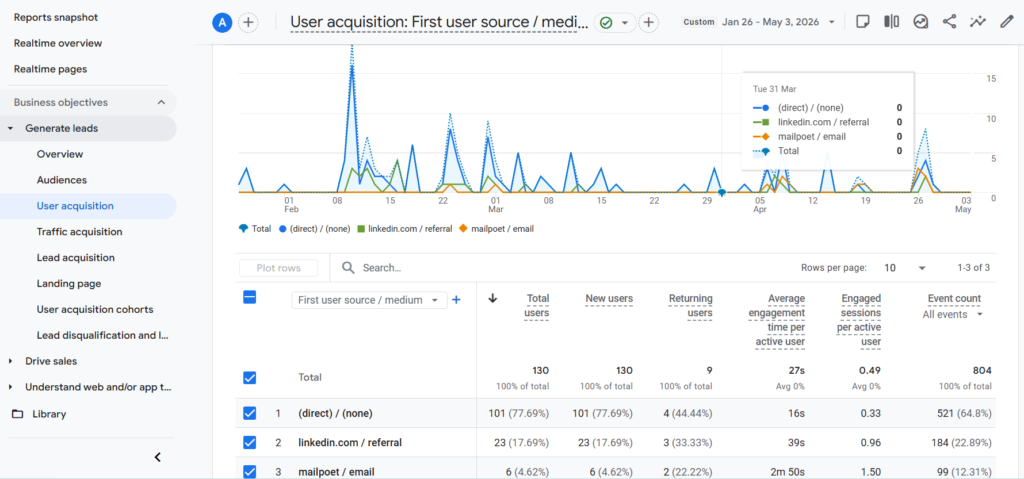
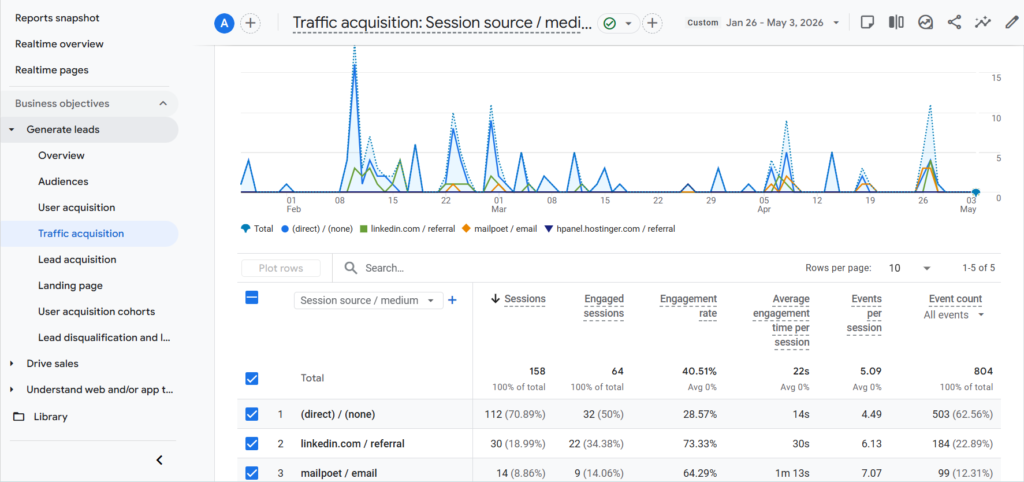
Seeing real numbers connected to my work made everything feel more meaningful and showed how small changes can make a difference.
Real Company Analysis Experience
I had the opportunity to analyze both Polaris Inc. and Microsoft to better understand their digital presence. By reviewing customer feedback for each company, I was able to identify common themes in both positive and negative reviews.
Applying the same analysis process to two very different companies helped me see how marketing strategies can vary depending on the industry and target audience. It also strengthened my ability to evaluate performance and think about potential improvements in a more structured way.
Social Media Utilization
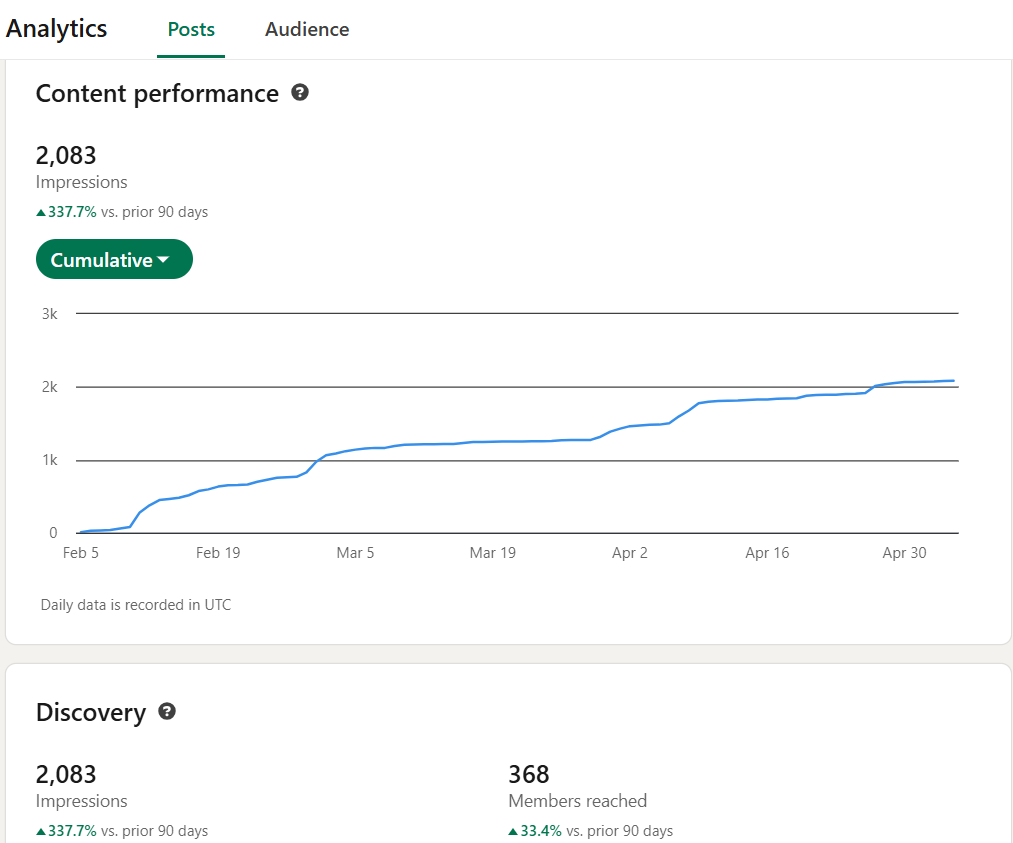
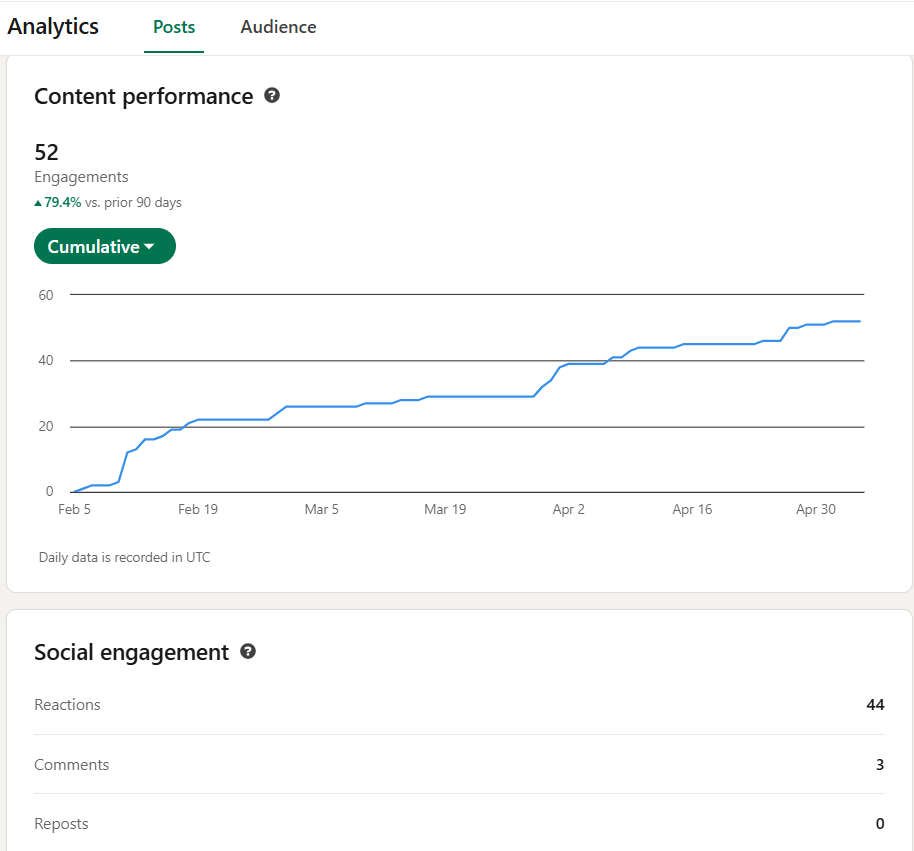
Using LinkedIn allowed me to share my work and start building a more professional presence. Posting content and seeing engagement helped me feel more confident in putting my work out there.
Engagement results:
- Number of Likes: 44
- Number of Comments: 3
- Number of Shares: 0
Network Growth:
- New Connections: 20
Key Achievements & Insights
One of my biggest accomplishments was building and managing my own website while tracking how users interacted with it–the whole experience felt very hands-on and practical. Another important takeaway was learning how to apply the same marketing process across different companies. Working with both Polaris and Microsoft helped me understand how strategies need to adapt depending on the audience and industry.
Future Application Plans
Moving forward, I plan to continue building on these skills in both academic and professional settings. I’m especially interested in improving my abilities in analytics and content strategy, since those seem to have a strong impact on performance. I also feel more prepared to approach digital marketing in a more structured and intentional way.
Contribution Plans for Target Companies
Based on what I’ve learned so far, I believe I could contribute by helping support digital marketing efforts through data analysis, content improvement, and user engagement strategies. I can also bring value by using AI tools efficiently while still maintaining a thoughtful and human-centered approach to content in our ever-evolving technological world.
Personal Growth
This course helped me grow both technically and professionally–I became more confident in learning new tools and applying them, and I also developed a more analytical way of thinking when looking at data and performance. I have enjoyed working with my classmates and professor to develop our skills together, getting to share our progress each week. Overall, I feel more prepared to continue developing these skills and applying them in real-world situations.
Portfolio Links
- Website Home page: Madyson’s Digital Marketing Research Lab
- Website Blog page: Blog – Madyson’s Digital Marketing Research Lab
- Personal LinkedIn profile: Madyson Bombard | LinkedIn
- Business LinkedIn page: Madyson’s Digital Marketing Lab: Company Page | LinkedIn
Acknowledgements
I would like to thank Dr. Lee for all of his help throughout this semester–his understanding and patience were much appreciated as we all learned this concept together. I also appreciate my family members who are on my email list and engage with my website each week.

Well-done on your project. I enjoyed reading your summary report and learned some things about how complex marketing can be. Thank you for sharing your final report.